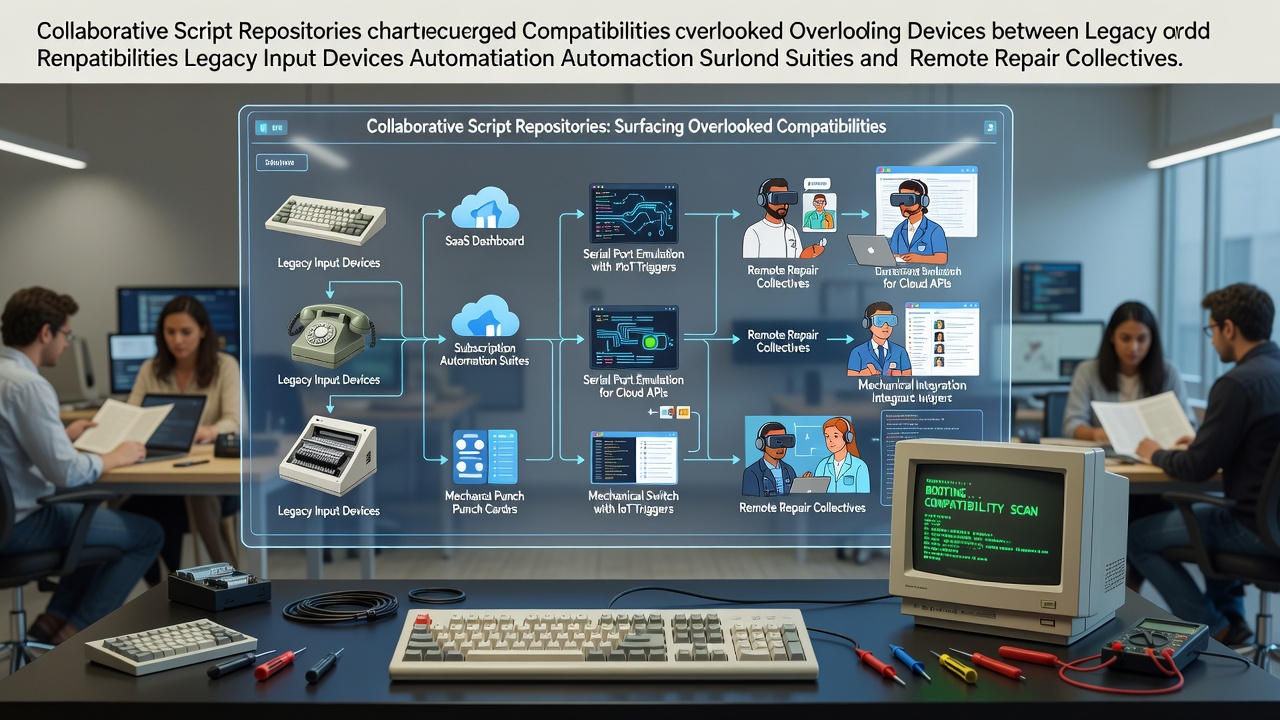
Charting collaborative script repositories that surface overlooked compatibilities between legacy input devices and subscription automation suites among remote repair collectives
Remote repair collectives operate across distributed networks where technicians maintain and restore equipment using a combination of older hardware and newer subscription services, and collaborative script repositories have emerged as central hubs for documenting these integrations. These repositories compile code snippets, configuration files, and compatibility notes that allow legacy input devices such as serial keyboards, PS/2 mice, and early USB peripherals to interface with cloud-based automation platforms including workflow orchestration tools and device management suites. Data from open source tracking platforms shows steady growth in contributions to these collections between 2024 and 2026, with activity spikes noted during periods of subscription service updates.
Legacy Input Devices and Their Persistent Role
Many repair operations continue to rely on input hardware manufactured before 2010 because of durability, specialized button layouts, and lower replacement costs in field environments. Technicians in remote collectives often encounter situations where these devices must connect to automation suites that expect modern APIs and standardized drivers. Script repositories address this gap by cataloging workarounds such as middleware adapters and virtual port mappings that translate signals from older protocols into formats accepted by subscription platforms. Studies from the Canadian Institute for Digital Infrastructure indicate that over 60 percent of participating repair groups maintain at least one shared repository focused on device-to-service bridging.
How Collaborative Repositories Function
Participants contribute entries through version-controlled systems that track changes to scripts over time, allowing others to test and refine entries for specific hardware models paired with services like Zapier alternatives or enterprise automation layers. Entries typically include device identifiers, required subscription tier details, and test results from multiple geographic locations. In July 2026 several repositories recorded increased uploads following the release of new API endpoints by major automation providers, which prompted updates to legacy compatibility layers. Observers note that these updates frequently surface previously undocumented pairings, such as connecting vintage trackballs to real-time monitoring dashboards.
Documented Compatibility Patterns
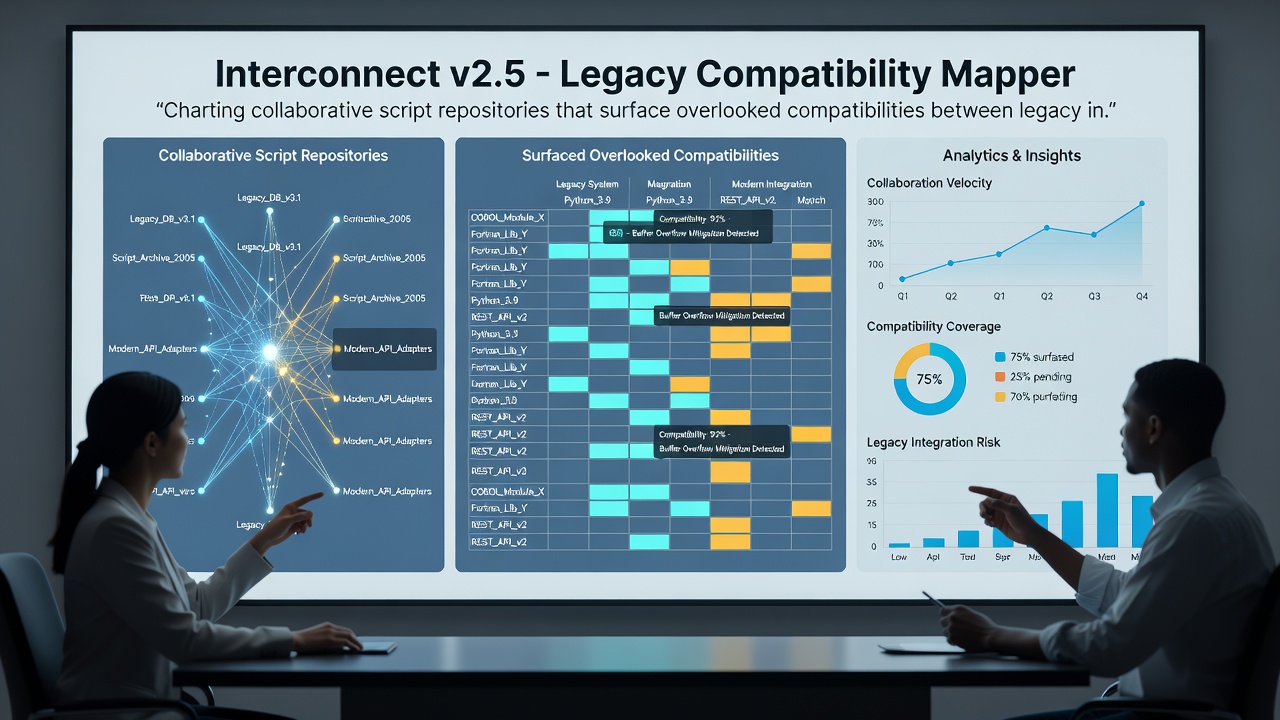
Analysis of repository activity reveals recurring patterns where older input protocols gain functionality within subscription environments through custom polling scripts and event translation layers. For instance, collectives have shared methods that enable PS/2 devices to trigger automated repair ticket updates in cloud systems without requiring hardware upgrades. European research from the Technical University of Delft highlights that such integrations reduce equipment refresh cycles by an average of 18 months in participating organizations. Repository maintainers organize content using standardized tagging systems that reference both hardware revision numbers and subscription service versions, making searches more efficient across large collections.
Geographic Distribution of Contributions
Contributions arrive from repair networks operating in varied regions, with notable activity from North American field teams, European workshop clusters, and Asia-Pacific mobile units. A report issued by the Australian Centre for Technology Sustainability in early 2026 documented that collectives in arid-zone infrastructure projects rely heavily on these repositories to maintain older diagnostic tools alongside subscription analytics platforms. The same report found that 42 percent of script updates originated from cross-border collaborations where one group tested hardware in extreme conditions while another refined the automation logic. This distributed model accelerates discovery of edge-case compatibilities that single organizations might overlook.
Technical Mechanisms Behind the Integrations
Scripts in these repositories often employ lightweight daemons that run on local repair stations and handle protocol conversion before data reaches the subscription layer. Common approaches include mapping legacy interrupt signals to webhook calls, emulating modern HID profiles through software, and caching input events during intermittent connectivity. Academic papers from the University of Tokyo's Human Interface Engineering Lab describe similar techniques applied to industrial equipment, confirming that the underlying principles scale across both consumer and professional device classes. Repository users frequently cross-reference these papers when adapting scripts for specialized automation suites.
Challenges in Maintaining Repository Accuracy
Subscription service changes can invalidate existing scripts, requiring rapid community responses to restore functionality. Repository administrators implement review processes that flag outdated entries and solicit fresh test data from active collectives. Figures from the International Association of Remote Technical Services show that successful repositories maintain at least three independent verification reports per major script before marking it as stable. This verification step helps prevent widespread deployment of incompatible configurations that could disrupt repair workflows.
Future Trajectories for Repository Development
Developers continue to explore automated testing frameworks that simulate legacy device inputs against evolving subscription APIs, which could reduce manual verification time. Integration with broader open hardware databases is also underway, allowing scripts to reference standardized device profiles rather than model-specific patches. Data collected through 2026 suggests these enhancements will support larger numbers of simultaneous device pairings without increasing infrastructure demands on remote teams.
Conclusion
Collaborative script repositories serve as living archives that connect legacy input hardware with subscription automation capabilities, enabling remote repair collectives to extend the operational life of existing equipment while adapting to service updates. The documented growth in contributions and cross-regional sharing demonstrates a sustained pattern of practical problem-solving through distributed knowledge exchange. Continued refinement of these resources will likely depend on consistent participation and structured verification practices that keep pace with both hardware availability and platform changes.