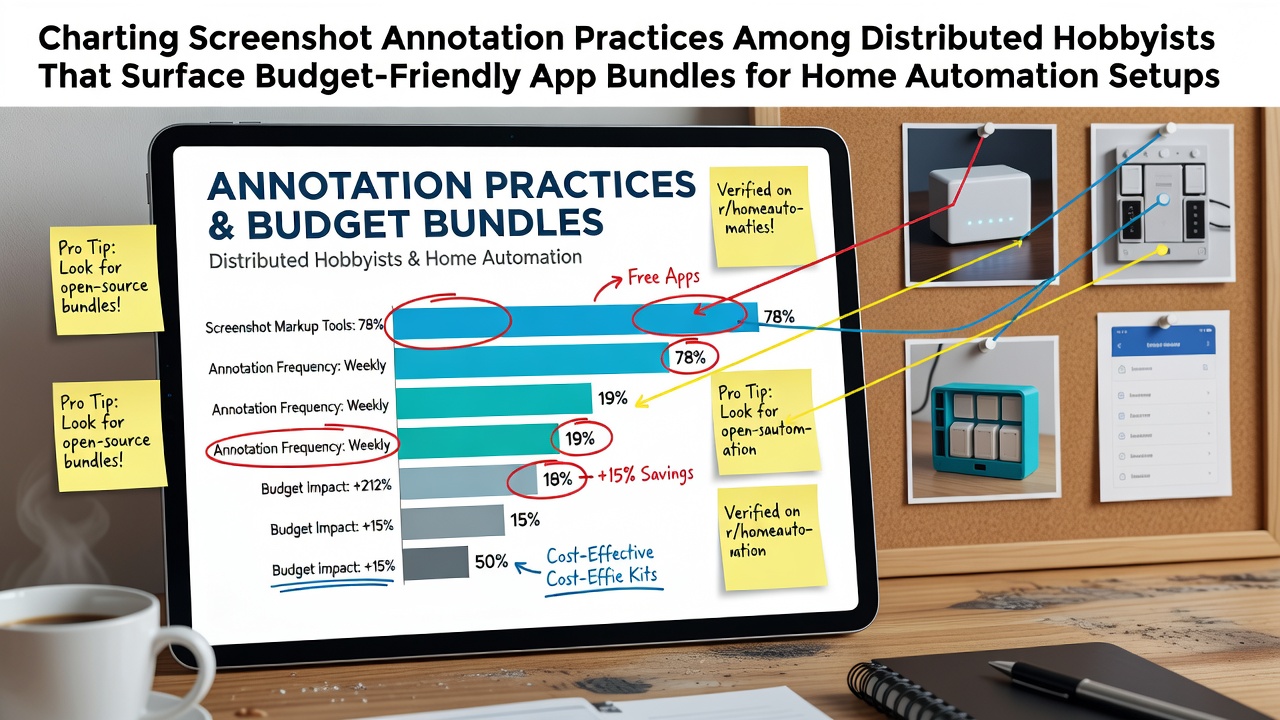
Charting Screenshot Annotation Practices Among Distributed Hobbyists That Surface Budget-Friendly App Bundles for Home Automation Setups
Distributed hobbyists have developed systematic approaches to screenshot annotation that help identify and share budget-friendly app bundles suited for home automation setups, and these methods continue to evolve as communities expand across multiple platforms in 2026. Observers note that participants capture interface elements from app stores and configuration screens, then apply layered markings to highlight pricing tiers, compatibility notes, and integration points before circulating the files in specialized forums.
Core Annotation Techniques in Use
Hobbyists typically begin by selecting screenshots that display bundle pricing alongside device compatibility lists, and they apply color-coded overlays to distinguish free tiers from paid upgrades while adding text labels that reference specific firmware versions. Researchers have documented how these markings often include arrows pointing to discount codes or regional availability flags, which allows others to verify offers without repeated searches. Data from community archives shows that such annotations reduce duplication of effort because users can scan a single annotated file rather than cross-checking multiple raw images.
Tools range from basic mobile markup applications to desktop programs that support layered exports, and participants frequently combine several options to embed hyperlinks directly into the image files. Those who study these workflows report that the practice gained momentum after platform updates in early 2025 introduced more granular bundle options, prompting hobbyists to standardize annotation templates for quick comparison across different ecosystems.
Community Sharing Patterns and Data Flows
Groups operating on decentralized networks exchange annotated files through threaded discussions where each contribution builds on prior markings, and this creates cumulative knowledge bases that track price fluctuations over months. Figures from aggregated forum logs indicate that bundles featuring lighting controls and sensor integrations receive the highest volume of annotations, while security-related packages draw fewer but more detailed comments because of stricter compatibility requirements. In June 2026 several threads documented sudden price drops on multi-device starter kits, with contributors adding timestamped notes that helped others time their purchases effectively.
What's notable is the geographic spread of these exchanges, since participants from varied regions contribute local pricing data that global users then cross-reference against shipping and regional store policies. Academic studies on collaborative knowledge sharing have examined similar patterns in other hobby domains, confirming that visual annotation accelerates information transfer compared to text-only descriptions.
Links to Budget App Discovery
Annotation practices directly feed into discovery pipelines because marked screenshots often include side-by-side comparisons of equivalent bundles from different vendors, and these visuals guide new entrants toward the lowest-cost options that still meet basic automation needs. External reports from organizations such as the Consumer Technology Association track rising adoption of integrated home systems, while data compiled by European research networks shows parallel growth in community-driven sourcing methods. Hobbyists who maintain shared repositories update entries whenever vendors release revised bundles, ensuring the annotated collection remains current without requiring each individual to monitor every storefront.
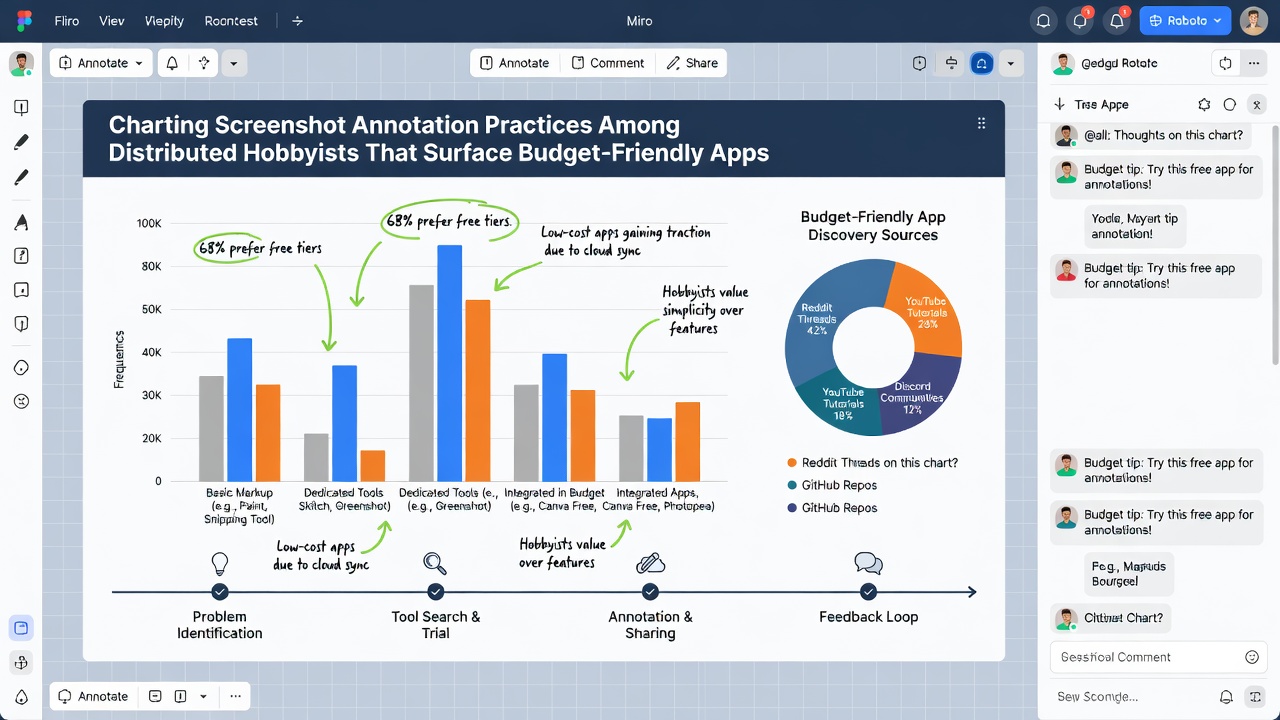
One documented case involved a cluster of users who mapped a lighting control bundle across three different vendors, adding persistent labels that flagged regional promotions active through the summer months. Those contributions later appeared in derivative threads where additional hobbyists appended notes about sensor add-ons that paired well with the base package. Such layering creates living documents that evolve as market conditions shift.
Technical Standards Emerging Across Groups
Over time, informal standards have taken shape around annotation color schemes and symbol sets, which reduces ambiguity when files cross between platforms. Participants who track these conventions report fewer clarification requests because consistent markings convey pricing history, feature gaps, and integration warnings at a glance. University-led examinations of distributed collaboration have identified similar standardization processes in other open-source style communities, where visual shorthand becomes a shared language over repeated cycles of exchange.
Storage practices also vary, with some collectives maintaining version-controlled folders while others rely on searchable tags embedded in the image metadata. Both approaches support retrieval when users search for specific automation categories such as climate control or security monitoring, and the resulting archives serve as reference points for future bundle evaluations.
Conclusion
Charting these screenshot annotation practices reveals an established ecosystem in which distributed hobbyists convert raw marketplace data into actionable visual resources that surface budget-friendly app bundles for home automation. The methods continue to adapt as new bundles appear and pricing models shift, yet the underlying pattern of capture, markup, and circulation remains consistent across regions and platforms. Continued documentation of these workflows provides insight into how communities sustain practical knowledge sharing without centralized coordination.