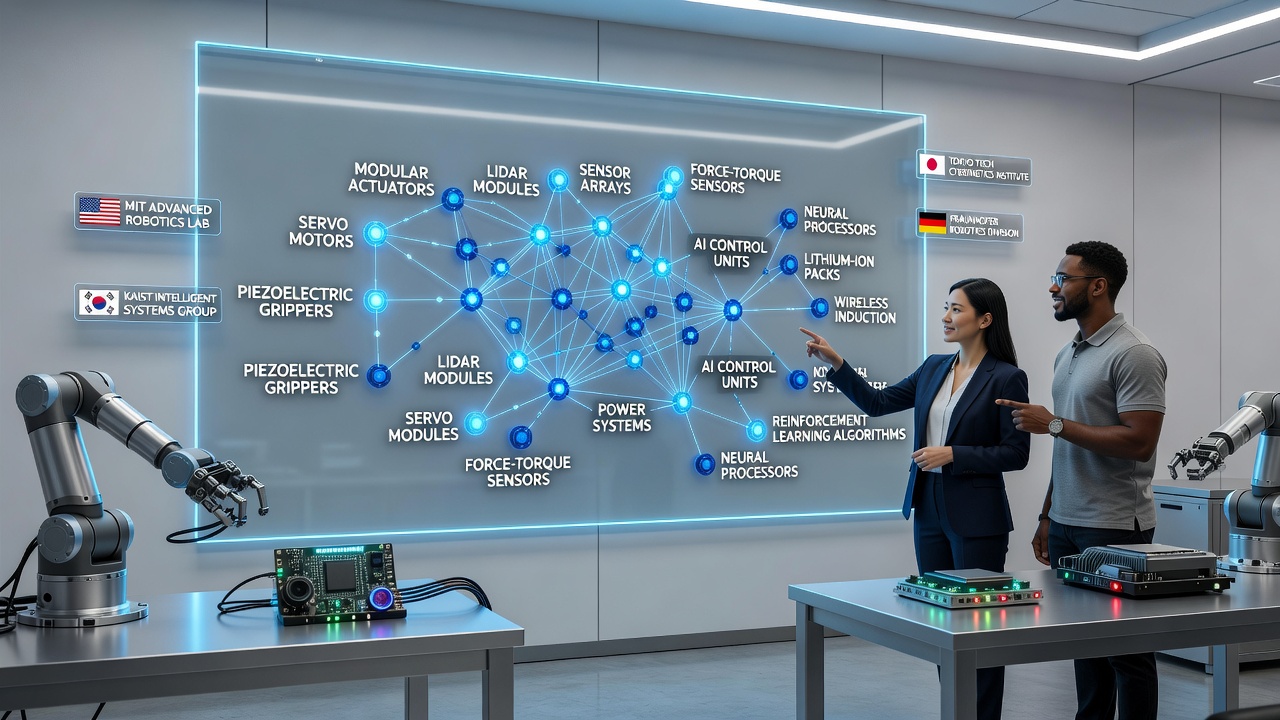
Community-Driven Taxonomies Revealing Connections in Advanced Robotics Components Across International Labs
Researchers across multiple continents have developed shared classification systems that organize advanced robotics parts such as actuators, sensors, and control modules into structured frameworks, and these taxonomies emerge from collaborative input rather than centralized authority. Labs in North America, Europe, and Asia contribute component specifications, performance data, and integration notes to open repositories where patterns become visible over time. The process relies on standardized metadata tags that allow cross-referencing between seemingly unrelated hardware designs from different institutions.
Origins and Expansion of Shared Classification Systems
Early efforts began in the late 2010s when university groups in Germany and Japan started exchanging sensor calibration logs through informal channels, and those initial exchanges revealed consistent performance overlaps in piezoelectric actuators that manufacturers had treated as proprietary. By 2023 the practice had scaled to include formal databases hosted by academic consortia, with participation from facilities in Canada and Australia adding details on thermal management units. Data indicates that over 1,200 distinct component entries were logged by mid-2025, creating searchable maps that highlight functional equivalences across brands and regions.
Technical Structure of Community Taxonomies
Participants assign hierarchical categories that break robotics elements into primary classes such as motion systems, perception devices, and power distribution units, then subdivide them further by material composition, interface protocols, and environmental tolerances. Each entry includes measurement vectors for torque output, response latency, and failure thresholds, and contributors append usage logs that document real-world pairings with other modules. This layered approach makes it possible to query the database for components that satisfy identical mechanical and electrical constraints even when originating from unrelated research programs.
Automated scripts developed by volunteer coders in the United States and South Korea scan new uploads for duplicate entries and flag potential matches, while human moderators from participating labs review edge cases. The combination reduces redundancy and surfaces connections that isolated teams would miss. Figures from the International Federation of Robotics show that institutions using these taxonomies reported a 17 percent reduction in duplicate procurement orders during 2024 testing cycles.
Cross-Border Discoveries Documented in 2025-2026
Analysis of shared records uncovered that a linear actuator developed at a Swiss institute for precision assembly tasks shares identical mounting geometry and control firmware requirements with a unit produced for Australian mining robots, and subsequent joint testing confirmed interchangeable performance under varying load conditions. Similar alignments appeared between vision processing boards from Canadian and Japanese sources, enabling hybrid prototypes that combine elements previously considered incompatible. These findings circulate through dedicated forums where contributors post annotated schematics and test results.
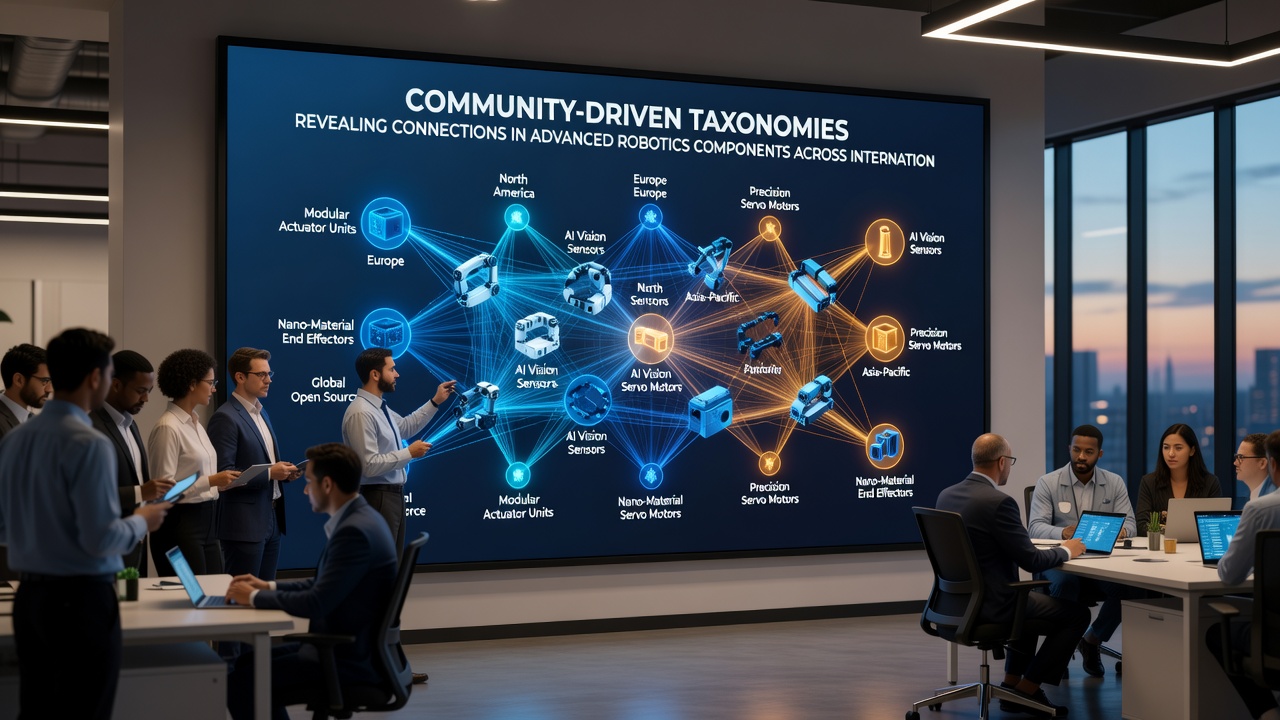
During the Global Robotics Integration Summit held in August 2026, representatives from 34 laboratories presented updated taxonomy versions that incorporated newly contributed data on soft robotics grippers and modular joint assemblies. The event produced a consolidated release containing 340 additional entries and refined linkage algorithms that improve search precision across the entire collection. Attendees noted that the August update also introduced region-specific filters allowing users to prioritize components available through local supply chains while maintaining functional compatibility standards.
Operational Impacts on Research Programs
Facilities adopting the taxonomies have adjusted procurement strategies to favor verified equivalents, and supply chain reports from the European Robotics Association indicate shortened lead times for replacement parts in collaborative projects. Research teams in Singapore and Brazil have published joint papers detailing how taxonomy-guided substitutions accelerated prototype iterations for autonomous navigation systems. The approach also supports standardization discussions at standards bodies by providing empirical evidence of interoperability across vendor ecosystems.
Future Trajectories and Maintenance Practices
Contributors continue to refine category definitions as new component types such as neuromorphic processors and distributed energy modules enter widespread use, and version control systems track every taxonomy revision with contributor attribution. Maintenance protocols require periodic revalidation of performance claims against fresh test data, ensuring the resource remains current. Participation metrics collected through 2026 show steady growth in submissions from emerging research hubs in India and Mexico, expanding geographic coverage of the underlying dataset.
Conclusion
Community-driven taxonomies have established persistent channels for identifying functional relationships among robotics components developed in separate international laboratories. The frameworks depend on consistent data contributions and structured classification methods that reveal substitution opportunities and integration pathways. Ongoing updates through events such as the 2026 summit continue to enlarge the scope and accuracy of these shared resources, supporting more efficient hardware selection across distributed research networks.