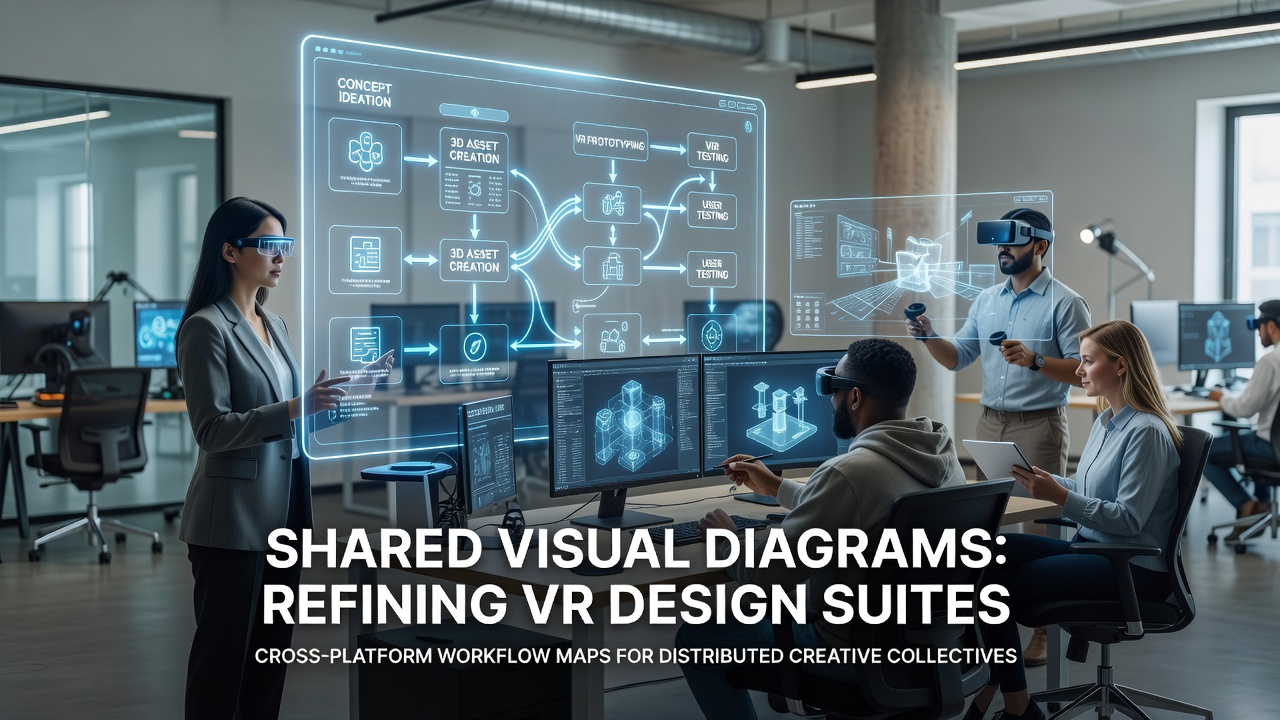
Cross-Platform Workflow Maps: How Shared Visual Diagrams Refine VR Design Suites Among Distributed Creative Collectives
Cross-platform workflow maps have emerged as central tools for creative groups working on virtual reality design projects from separate locations, and these maps consist of visual diagrams that teams edit together in real time regardless of the software each member uses. Data from industry reports shows adoption of such systems rising steadily through 2025 and into June 2026 as companies expand remote collaboration in immersive content creation. Researchers at various institutions have documented how these diagrams connect different VR authoring environments, allowing adjustments to propagate across Unity-based pipelines and Unreal Engine setups without manual file conversions.
Creative collectives often maintain members spread across time zones, and workflow maps reduce misalignment by displaying asset hierarchies, interaction sequences, and spatial layouts in a single shared view. Studies conducted by European research consortia indicate that teams using synchronized visual diagrams complete iteration cycles 30 percent faster on average compared with groups relying solely on text-based task trackers. The maps integrate with existing VR design suites through APIs that pull live data from modeling tools, animation timelines, and testing environments.
Mechanics of Shared Diagram Integration
Teams begin by importing base project structures into a central diagramming layer that supports export formats from multiple VR platforms, and this layer updates automatically when changes occur in any connected application. Observers note that color-coded nodes represent different asset types while connecting lines illustrate dependency chains, and participants can add comments or version markers directly on the diagram. In June 2026 several platforms introduced native support for WebXR previews embedded inside the maps, letting distributed members test spatial interactions without leaving the collaborative workspace.
Configuration logs generated by these systems record every edit with timestamps and contributor identifiers, creating audit trails that help collectives maintain consistency across large-scale VR environments. Academic papers from Australian universities have examined how such logs correlate with reduced duplication of work in multi-studio projects, particularly when designers handle lighting setups while engineers adjust physics parameters on separate continents.
Impact on Design Suite Refinement
Shared visual diagrams allow feedback loops to form earlier in the production process, and this timing helps identify interface issues before they reach final builds. Figures from North American industry surveys reveal that studios adopting cross-platform maps report fewer revision requests during late-stage QA phases. The diagrams serve as living documentation that evolves alongside the VR experience itself, and updates made in one suite appear instantly in the shared view for all other participants.
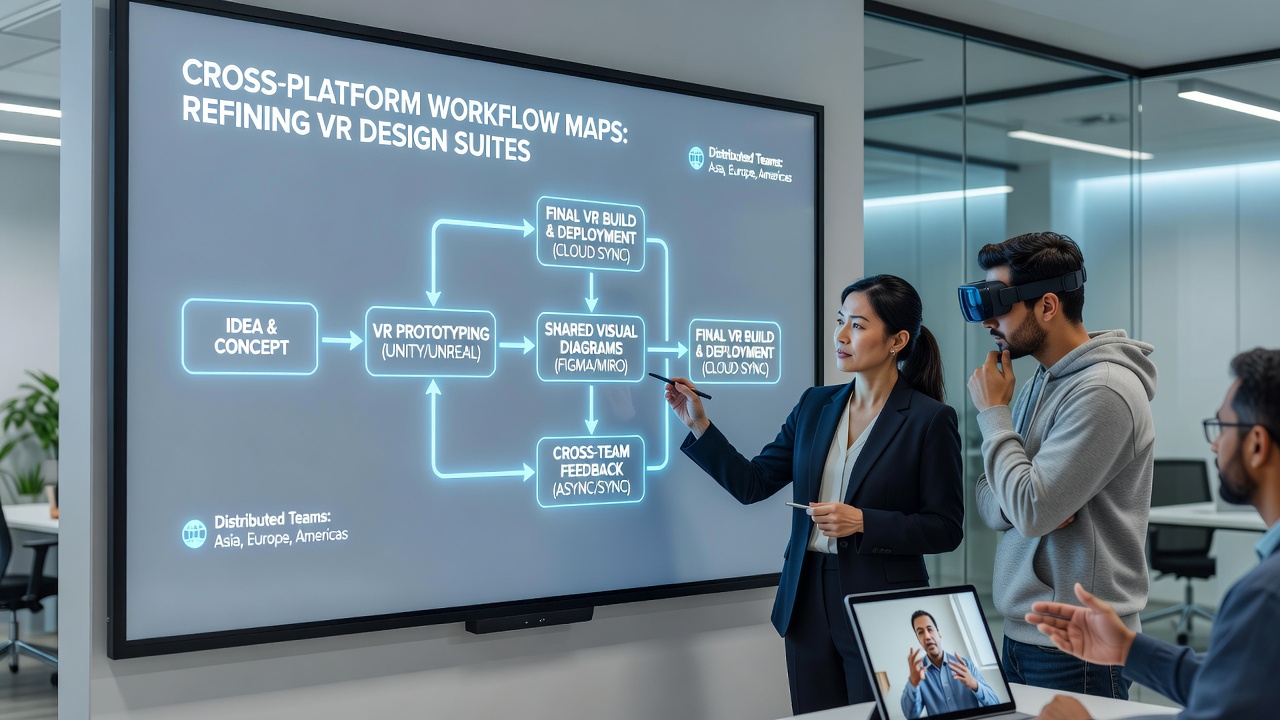
Those who have studied these workflows describe how the maps surface platform-specific constraints early, such as polygon limits on mobile VR headsets or shader compatibility between different rendering engines. Creative collectives use these insights to standardize asset pipelines while preserving the flexibility each team member needs for specialized tasks. Government innovation reports from Canadian agencies highlight grants supporting development of open mapping standards that further reduce friction between commercial VR tools.
Case Examples from Distributed Collectives
One collective working on educational VR modules for medical training synchronized diagrams across four studios located in different countries, and the shared maps helped align anatomical model scales with interaction triggers. Another group focused on architectural visualization projects used the diagrams to track lighting variations tested in separate rendering environments, and data logs showed consistent reduction in mismatched asset versions over successive releases. These patterns appear across multiple documented projects rather than isolated instances.
Industry organizations such as the VR/AR Association have compiled usage statistics indicating broader uptake among mid-sized studios since 2024, and academic analyses from institutions in Asia have explored similar trends in game development collectives. The maps also support onboarding of new contributors by presenting project status visually instead of requiring review of scattered code comments or chat histories.
Technical Considerations for Broader Adoption
Compatibility layers within workflow mapping tools continue to expand, and June 2026 updates introduced improved handling of procedural generation nodes that feed directly into VR scene builders. Security protocols encrypt diagram data during transmission, while permission settings let collectives control which sections remain editable by external partners. Research indicates that latency remains a factor when teams span multiple continents, yet buffering techniques and regional server distribution have mitigated most disruptions.
Collectives that maintain consistent diagram standards report smoother handoffs between design and engineering phases, and the visual format helps surface overlooked dependencies such as audio cue timing relative to user movement paths. External frameworks from regulatory bodies in the EU continue to influence data handling practices for collaborative platforms, ensuring compliance across borders.
Conclusion
Cross-platform workflow maps function as connective tissue for distributed VR design work by translating complex project elements into accessible visual formats that multiple tools can reference simultaneously. Evidence from ongoing studies and usage data demonstrates measurable effects on iteration speed and error reduction across creative collectives. As integration capabilities advance through 2026 and beyond, these diagrams are likely to remain central to how remote teams coordinate immersive content development across varied technical environments.