
Decoding Seasonal Discount Patterns for Cloud-Based Collaboration Suites in Educational Technology Circles
Cloud-based collaboration suites such as Microsoft 365 Education and Google Workspace for Education follow observable discount cycles that align with academic calendars across multiple regions, and researchers have tracked these patterns through procurement data from school districts since the expansion of remote learning tools in the late 2010s. Educational technology buyers often see reduced per-user pricing during periods when institutions finalize budgets for the upcoming term, while vendors adjust offers to capture volume commitments before fiscal deadlines close.
Observed Cycles Tied to Academic Timelines
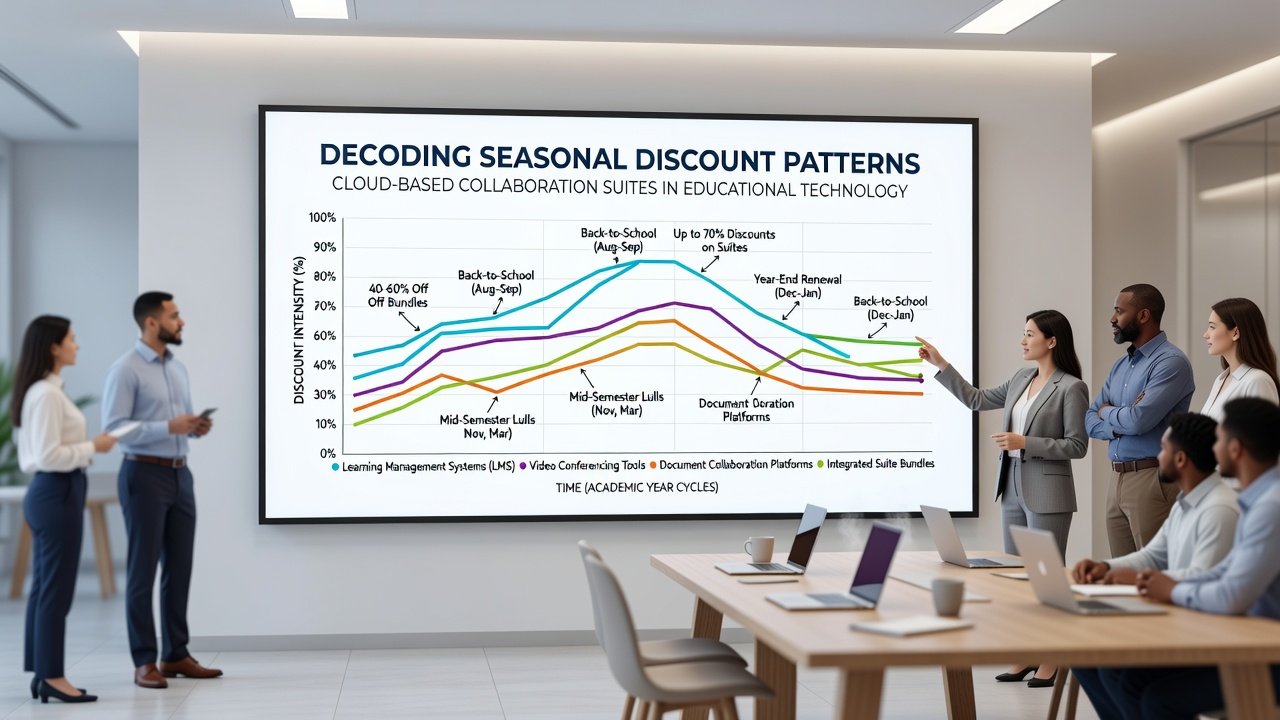
Data from institutional purchasing records shows that discount activity intensifies in late summer months, and this timing coincides with back-to-school preparations in North America as well as similar enrollment cycles in parts of Europe and Australia. In August 2026, procurement teams at universities and K-12 districts are expected to review renewal terms for collaboration platforms, with many suites offering tiered reductions that scale according to student headcount and multi-year commitments. Those who monitor vendor announcements note that summer promotions frequently bundle storage upgrades or advanced administrative controls at no extra cost during these windows.
Winter periods present a secondary peak, particularly around fiscal year-end reporting in December and January, while spring months tend to feature smaller targeted incentives aimed at pilot programs rather than full-scale deployments. Observers tracking these shifts point to alignment between vendor sales targets and institutional budget approval processes, which creates predictable windows for negotiation on features like real-time co-authoring and integration with learning management systems.
Regional Variations in Pricing Strategies
European education networks report discount structures that emphasize compliance with data protection standards, and these offers often appear in coordination with grant cycles funded through national programs. A report from the European Commission highlights how collaboration suite providers adjust licensing during the second quarter to match funding disbursements, creating opportunities for districts to secure add-ons such as advanced analytics without increasing overall expenditure. Canadian institutions follow a similar pattern, with provincial education ministries releasing procurement guidelines that influence when vendors release seasonal promotions.
Asia-Pacific markets display their own rhythms, where academic years begin in different months and create staggered discount events compared to Western calendars. Research from the OECD indicates that these regional differences lead vendors to maintain rolling promotional calendars rather than uniform global campaigns, allowing educational buyers to compare terms across providers during overlapping availability periods.
Factors Influencing Discount Depth and Duration
Volume commitments remain the primary driver of deeper reductions, and institutions that consolidate multiple departments under a single agreement frequently achieve lower per-seat rates than those negotiating on a smaller scale. Vendor competition also plays a role, as new entrants in the collaboration space introduce introductory pricing that established platforms match during peak decision months. Studies compiled by EDUCAUSE show that these competitive pressures result in more flexible contract lengths, including options for mid-term adjustments when enrollment numbers fluctuate.
Additional variables include integration requirements with existing infrastructure and the availability of training resources bundled into the subscription. Districts that request customized onboarding packages during renewal discussions often receive extended discount periods, extending the effective savings beyond the initial promotional window. Figures from vendor earnings reports confirm that education segments contribute steady recurring revenue, which encourages providers to maintain these seasonal incentives as a retention mechanism.
Tracking Tools and Data Sources Used by Buyers
Procurement officers increasingly rely on shared spreadsheets and internal dashboards to log historical pricing from previous cycles, and these records help forecast likely terms for upcoming renewals. Industry associations publish comparative summaries that aggregate anonymized data from member institutions, giving smaller districts access to benchmarks they might not compile independently. Such resources allow teams to identify when a quoted rate falls within or outside typical seasonal ranges.
Automated alert systems from vendor portals notify subscribers when new education-specific offers become available, and these notifications often include eligibility criteria tied to accreditation status or nonprofit classification. Educational technology coordinators who maintain updated profiles on these platforms receive advance notice of changes before public announcements, which supports more accurate budget modeling.
Conclusion
Seasonal discount patterns for cloud-based collaboration suites in educational settings reflect the intersection of academic calendars, institutional budgeting processes, and vendor sales objectives. Organizations that align their review timelines with documented cycles gain access to structured pricing that scales with enrollment and commitment length. Continued monitoring of regional funding announcements and competitive shifts provides the factual basis for anticipating future adjustments without reliance on speculation.