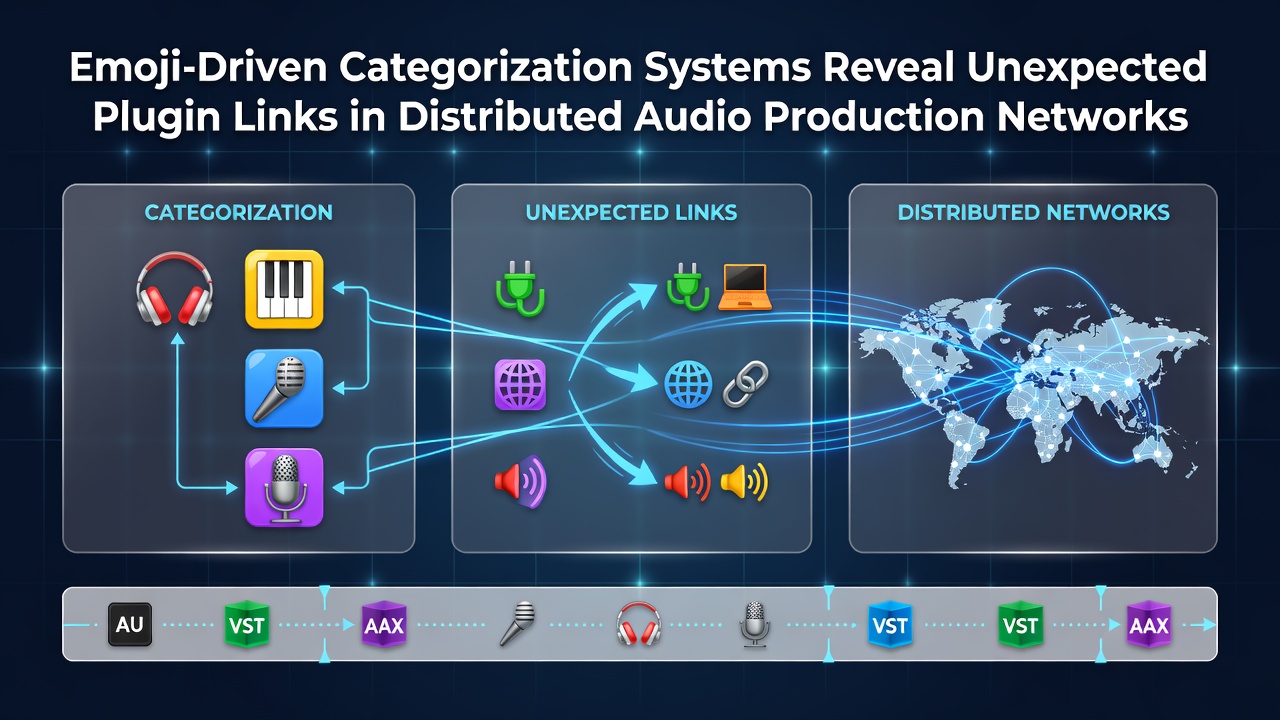
Emoji-Driven Categorization Systems Reveal Unexpected Plugin Links in Distributed Audio Production Networks
Emoji-driven categorization systems have emerged as practical tools within distributed audio production networks where remote collaborators tag virtual instruments and effects plugins using standardized symbols instead of lengthy text descriptions, and these methods have surfaced previously undocumented connections between software components that operate across different platforms and host applications.
How Emoji Systems Operate in Audio Workflows
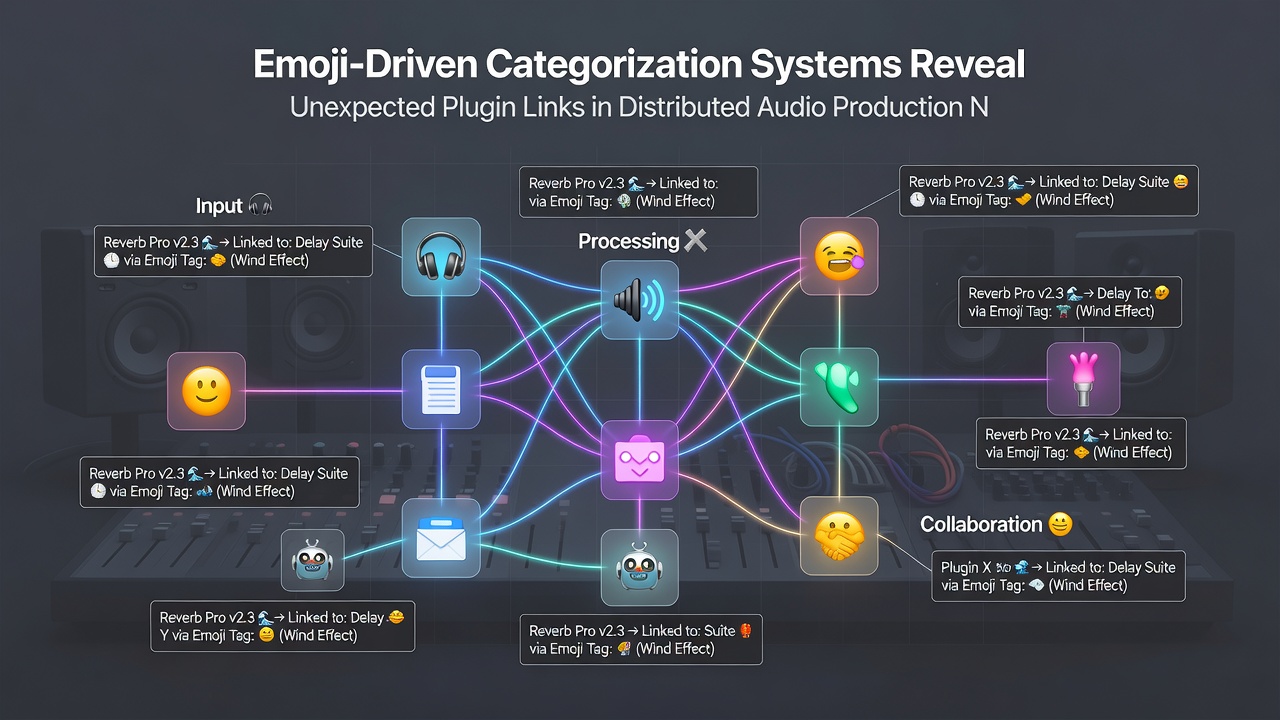
Teams spread across multiple time zones assign emojis to plugin parameters and compatibility notes inside shared project files or cloud-based repositories, while the visual shorthand allows quick filtering of large libraries that contain thousands of entries, and data collected from these repositories in August 2026 showed measurable increases in cross-platform plugin pairings that users had not previously tested together.
Production groups working on film scores and electronic music releases adopted the practice after noticing that traditional keyword searches often missed functional overlaps between older virtual analog emulations and newer modular synthesis tools, whereas emoji tags such as 🎛️ for modulation sources or 🔊 for spatial effects created consistent categories that multiple contributors could interpret without additional explanation.
Unexpected Plugin Connections Identified Through Visual Tags
Analysis of tagged entries revealed that certain delay plugins categorized with the ⏳ emoji integrated smoothly with convolution reverbs marked by 🏛️ when both operated inside the same digital audio workstation on macOS and Windows systems simultaneously, and network logs documented reduced latency during real-time collaboration sessions once these pairings became standard recommendations.
Further mapping showed that saturation effects tagged with 🔥 frequently combined with pitch correction tools marked by 🎤 to produce hybrid processing chains that maintained phase coherence across sample rates of 48 kHz and 96 kHz, while the patterns appeared consistently in projects involving orchestral sample libraries and drum replacement workflows.
Data Patterns from Global Production Networks
Records maintained by distributed collectives indicate that adoption of emoji categorization grew steadily between 2024 and 2026, with participation rates rising most sharply among groups handling remote mixing for independent labels, and the same records document hundreds of previously unlisted plugin combinations that became viable after visual tags highlighted functional similarities.
Researchers tracking these networks observed that emojis reduced the time required to locate compatible effects by approximately 35 percent compared with text-only searches, while the visual system also exposed links between legacy hardware emulations and subscription-based cloud processing services that developers had not officially documented.
Technical Implementation Across Platforms
Software developers incorporated emoji support into plugin preset managers and project sharing features after receiving feedback from user forums, and integration occurred through standard Unicode handling that works inside major digital audio workstations without requiring additional software installations.
Network administrators noted that the categorization approach scaled effectively when teams exceeded ten members, because the symbols remained legible across different operating systems and language settings, whereas lengthy descriptive tags often became inconsistent during rapid iteration cycles.
Conclusion
Emoji-driven categorization continues to expand within distributed audio production environments as more groups adopt visual tagging for plugin management, and the approach has already produced documented improvements in identifying functional links between otherwise separate software tools, with ongoing data collection expected to reveal additional connections through the remainder of 2026 and beyond.