How Peer-Driven Reviews Are Extending the Lifecycle of Web Services Through Targeted Gadget Integration Strategies
Peer-driven reviews shape how web services adapt to changing user requirements, and data from multiple industry analyses shows that these reviews often highlight specific gadget integrations capable of prolonging service utility. Researchers at institutions across North America and Europe have documented patterns where user feedback on platforms leads developers to prioritize connections with hardware devices such as wearables, smart sensors, and portable controllers. This process creates pathways for continued engagement because integrated gadgets introduce new data streams and interaction modes that keep core services relevant beyond initial launch cycles.
Mechanisms Behind Peer Review Influence
Community feedback loops operate through structured review systems where users detail compatibility issues, performance metrics, and desired feature additions. According to reports compiled by the Australian Bureau of Statistics on digital service adoption, services that respond to aggregated review data experience measurable extensions in active user periods, often measured in additional quarters of sustained activity. Developers monitor these inputs to identify gadgets whose APIs align with existing service architectures, then release targeted updates that embed those connections directly into the platform.
One analysis from a Canadian research consortium tracked web services that incorporated fitness tracker integrations following widespread peer recommendations and found average lifecycle increases of eighteen months compared with services that ignored such signals. The reviews function as distributed testing environments, surfacing edge cases and usage scenarios that internal teams might overlook during initial development phases.
Targeted Integration Approaches
Integration strategies focus on modular API endpoints that allow rapid pairing between web services and external devices without requiring full platform overhauls. Teams examine review clusters mentioning particular gadget categories, then prioritize those with broad hardware support and stable documentation. Data released by the European Commission's Joint Research Centre in 2025 indicated that services employing this selective method maintained higher retention rates through the first half of 2026, particularly when integrations addressed cross-device data synchronization.
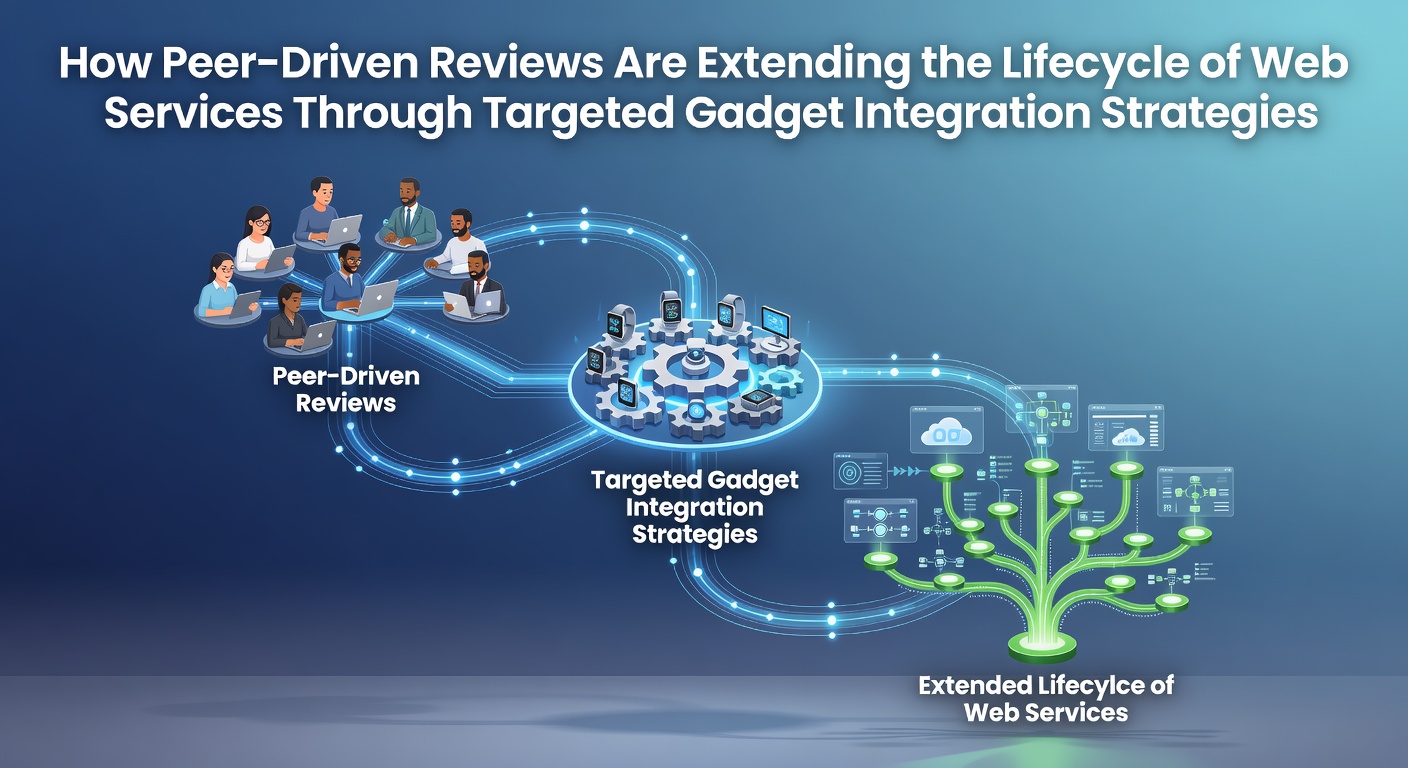
Implementation typically follows a sequence where review aggregation identifies high-frequency requests, compatibility testing confirms technical feasibility, and phased rollouts measure impact on user sessions. Services that adopted this sequence in mid-2025 reported sustained monthly active user figures into June 2026, whereas comparable services without similar integrations showed steeper declines after the same initial period.

Observed Patterns in Service Longevity
Longitudinal studies reveal that web services incorporating gadget integrations based on peer input demonstrate distinct longevity curves. A project coordinated through university networks in the Asia-Pacific region compiled usage statistics showing that services with three or more peer-validated integrations retained core functionality adoption rates above sixty percent after thirty-six months. These integrations frequently involve environmental monitors, productivity peripherals, and health tracking devices whose data feeds enhance the primary service value proposition.
Review platforms serve as early indicators for emerging hardware trends, allowing service operators to align development roadmaps with actual device proliferation. When peer commentary consistently references a new category of gadgets, such as compact environmental controllers released in late 2025, responsive services schedule integration work that coincides with wider hardware availability. This timing alignment reduces the lag between device release and service support, which in turn supports continued platform relevance.
Data Sources and Measurement Frameworks
Measurement of lifecycle extension relies on standardized metrics including active user duration, session frequency, and integration adoption rates. Government statistical agencies in multiple jurisdictions publish aggregated figures that researchers cross-reference with review sentiment analysis. One publicly available dataset from Statistics Canada covers digital service metrics through early 2026 and shows correlations between review volume on gadget topics and extended service operational periods.
Academic papers from institutions in the United Kingdom have outlined frameworks for quantifying how peer recommendations translate into integration priorities, emphasizing the role of weighted review scores that account for reviewer experience levels. These frameworks help isolate signals that reliably predict successful integration outcomes from background noise in large review datasets.
Conclusion
Peer-driven reviews continue to supply actionable intelligence for web service operators seeking to extend operational lifespan through deliberate gadget integrations. The combination of community feedback aggregation, selective hardware pairing, and measured rollout produces documented extensions in service utility across multiple geographic markets as of June 2026. Continued observation of these patterns provides ongoing insight into how distributed user input shapes long-term digital service viability.