The Interplay of Tutorial Chains and Support Networks in Extending App Lifecycles Across Niche Web Services
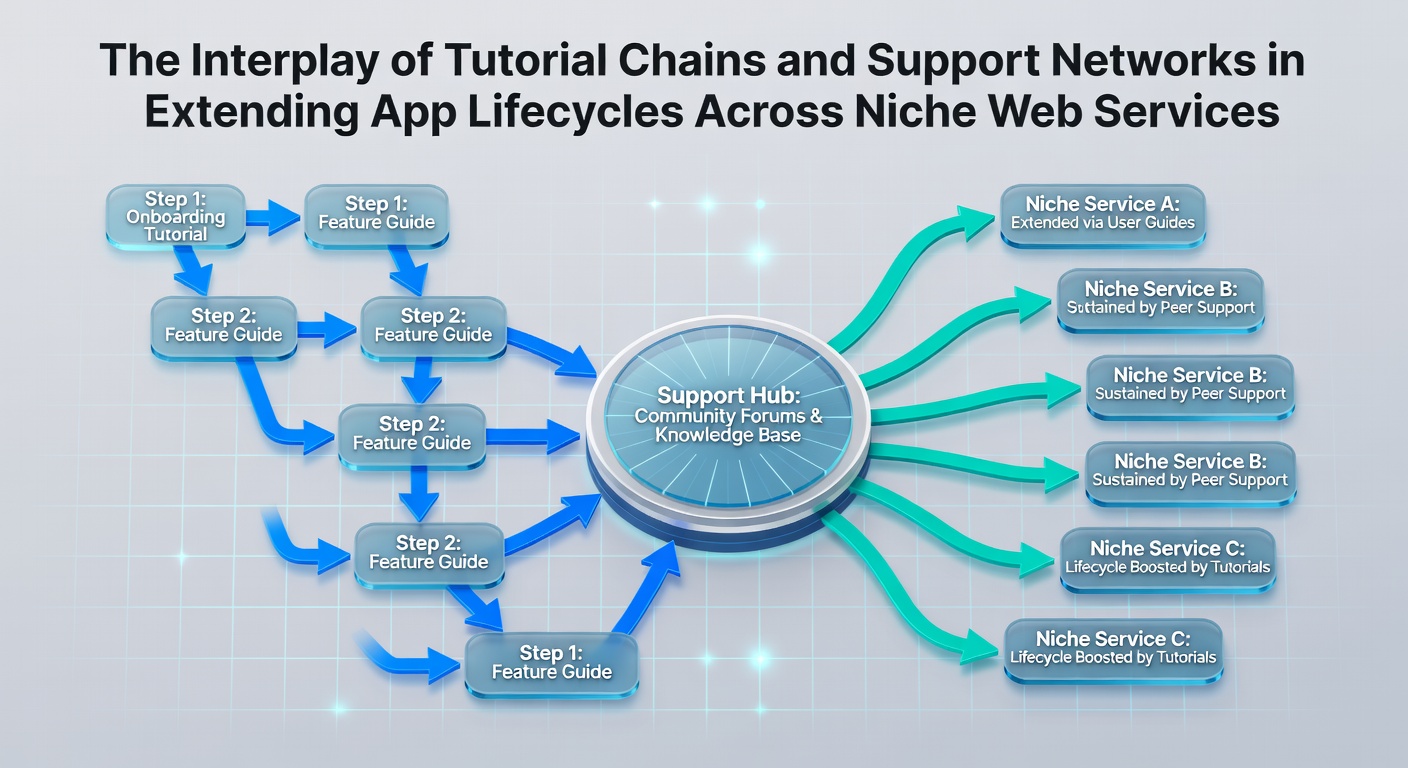
Developers of niche web services often rely on structured tutorial sequences that build user skills progressively while community support networks supply ongoing assistance and feedback loops. These elements work together to sustain engagement long after initial adoption, according to data from digital economy reports. Researchers have tracked how tutorial chains guide users through core features before advancing to specialized functions, which reduces early drop-off rates in tools designed for specific industries such as freelance graphic design or regional agricultural logistics.
Defining Tutorial Chains in Niche Contexts
Tutorial chains consist of linked modules that start with onboarding basics and expand into advanced customization options tailored to narrow user groups, and they frequently incorporate interactive checkpoints that adapt based on prior completions. Studies from academic institutions show these sequences help maintain relevance by updating content in response to platform changes, which keeps older applications competitive against newer entrants. In practice, a chain might begin with simple account setup for a specialized inventory platform and progress to API integrations that connect with local supplier databases.
Role of Support Networks in Sustaining Usage
Support networks operate through forums, shared documentation repositories, and real-time chat groups where experienced users resolve issues that official documentation overlooks. Data indicates these networks extend service lifecycles by generating user-driven updates and feature requests that developers incorporate directly. Observers note that participants often share custom scripts or workflow templates, which in turn attract new members and reinforce retention among existing ones.
What's interesting is how these networks surface patterns in usage data that reveal when certain tutorial segments need revision, creating a feedback mechanism that aligns educational resources with actual community needs. As of May 2026, figures from the Australian Bureau of Statistics reveal steady growth in collaborative platforms supporting regional niche services, with participation rates climbing as users seek peer validation for complex integrations.
Interconnections Between Chains and Networks
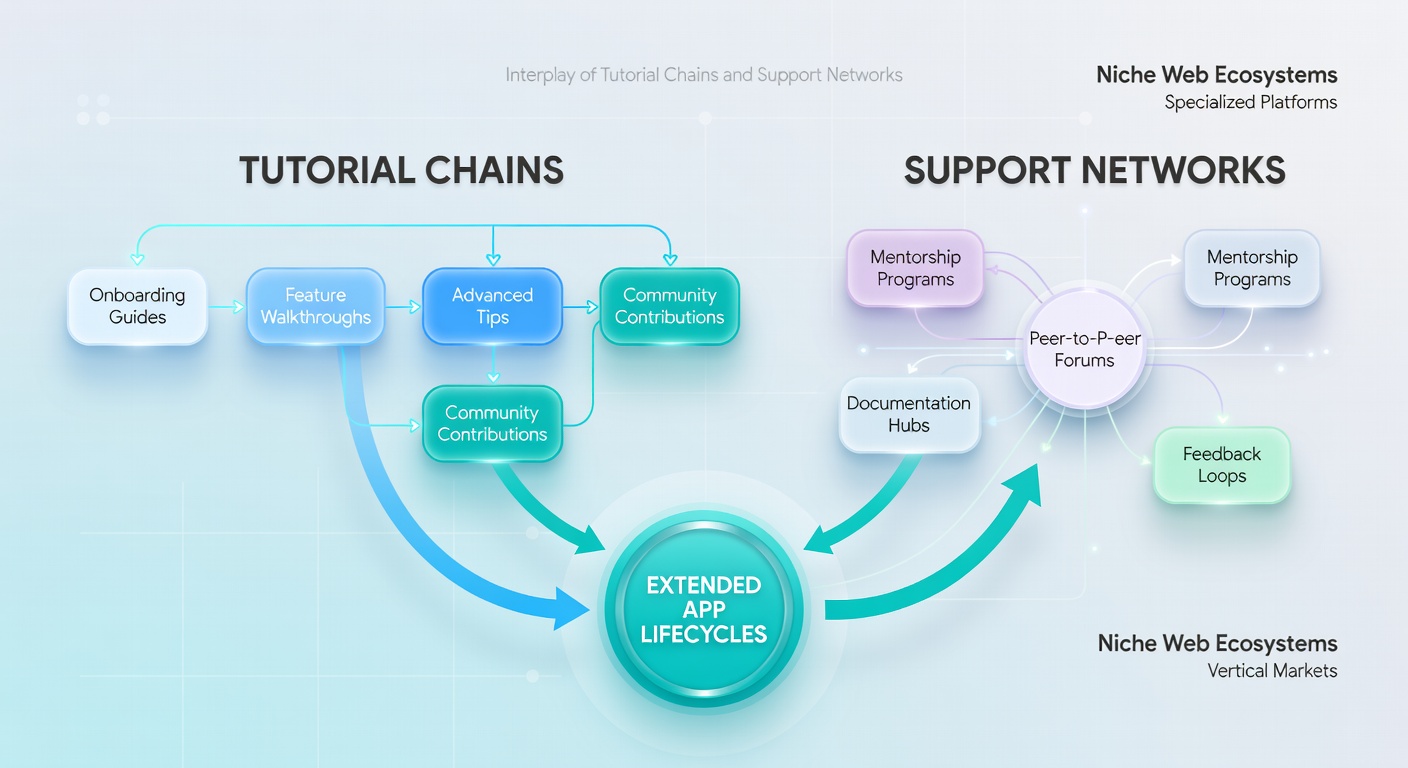
Tutorial chains feed directly into support discussions when users encounter roadblocks, while network contributions often refine or expand those same chains through shared case studies and annotated examples. This cycle allows developers to prioritize updates based on collective input rather than isolated analytics, and it proves especially effective in markets where broad commercial support remains limited. Experts have observed that services incorporating community-sourced examples into tutorial updates see prolonged active user bases compared with those relying solely on static guides.
One researcher who examined European digital service archives found that niche platforms with active tutorial-support interplay maintained operational status for extended periods because participants volunteered maintenance tasks during low-development phases. The reality is that these interactions transform passive users into contributors who document workarounds and advocate for compatibility patches across evolving browser standards.
Evidence from Industry Observations
Reports compiled by research bodies such as the OECD highlight measurable differences in retention metrics when tutorial chains receive continuous input from support communities. Organizations tracking web service metrics across multiple regions document how integrated systems correlate with slower decay in monthly active users, particularly among tools serving specialized sectors like archival research or bespoke manufacturing coordination. And yet the process remains straightforward in execution: chains provide teh learning path while networks supply the troubleshooting layer that prevents abandonment.
Conclusion
Overall patterns show that tutorial chains paired with robust support networks create self-reinforcing structures capable of extending the functional lifespan of niche web services through sustained education and collaborative problem-solving. Those who have examined adoption trends across various platforms recognize that the combined approach adapts more readily to shifting technical requirements and user expectations. Continued monitoring of these dynamics offers insights into how smaller-scale digital tools maintain viability without constant large-scale redevelopment.